Author: admin

  • The Accountability Portal: Bridging the State Knowledge Gap

    About This Resource: At Voices For The Rare, we believe that “administrative ignorance” is a form of systemic erasure. For too long, rare disease patients in Arizona have been told by state agencies (AHCCCS/DES/DDD) that they “do not know” how to process Section 811 PRA referrals or that they “lack the training” to accommodate medically fragile residents.

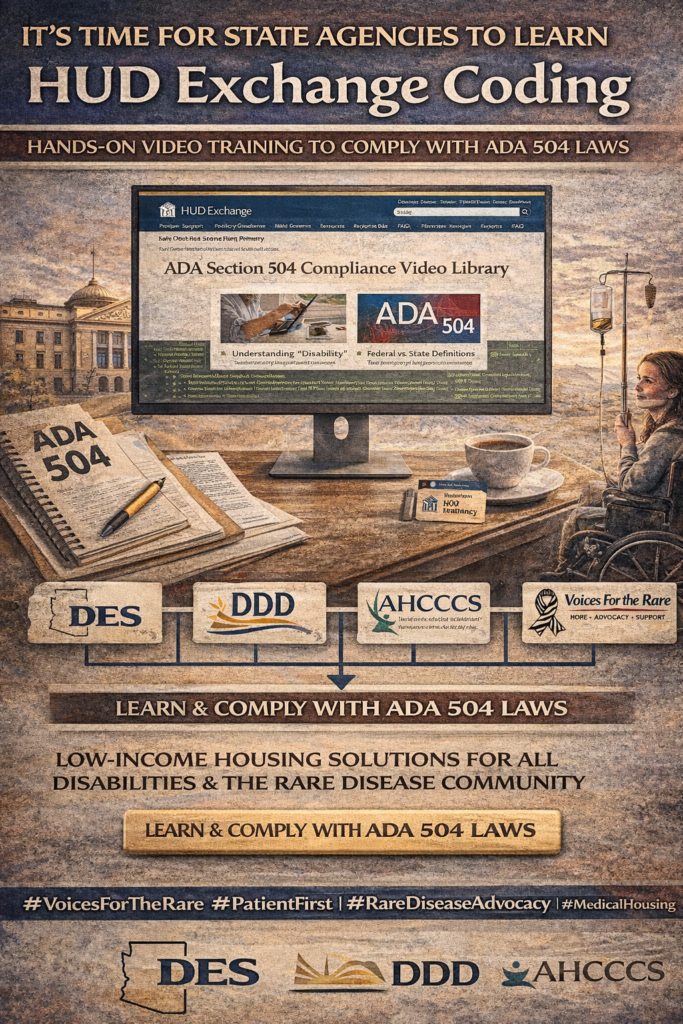
    This portal exists to eliminate those excuses. Below are the direct links to the HUD Exchange Training Library and Federal Systems Mapping—the exact tools HUD has provided to state agencies to ensure 504 compliance and successful housing placement. We invite advocates, case managers, and state administrators to utilize these resources to bring Arizona into federal compliance.


    Federal Training Library for State Agencies

    1. Section 811 PRA: Systems Mapping & Referral Flow

    This is the “blueprints” for the program. It outlines exactly how the state is supposed to coordinate between housing and health agencies to prevent referral blackouts.

    2. Mandatory Reasonable Accommodation (Parts 1 & 2)

    These federal webinars outline the legal obligation for state agencies and developers to accommodate residents with disabilities—including extending response windows and accepting non-verbal communication.

    3. HUD Secure Systems: Technical Setup Guide

    When agencies claim “technical issues” with the HUD portal, they are ignoring these step-by-step guides. This video covers the IDs, passwords, and administrative setup required for state grantees.

    4. Supporting Successful Tenancies

    This training focuses on the “supportive” part of Supportive Housing—ensuring that once a rare disease patient is housed, they have the integrated services needed to thrive.

    Target PageFocus Phrase (SEO Target)Why it works
    Bridge to Care Page“Medically integrated housing pilot Pinal County”Targets local government and developers looking at your specific model.
    811 PRA Training Page“HUD Section 811 PRA referral training Arizona”Captures case managers and state employees searching for how to do their jobs.
    340B Reform Page“340B patient-first reform Arizona pharmacy savings”Connects your drug pricing advocacy to the broader national conversation.
    Medical Portability Page“Housing voucher portability for rare disease patients”Attracts people in “medical deserts” searching for ways to move closer to care.
    Voices For The Rare - Rare Disease Housing Advocacy Arizona
  • FOR IMMEDIATE RELEASE

    Voices For The Rare Launches “Bridge to Care” Pilot to End Medical Displacement in Rural Arizona

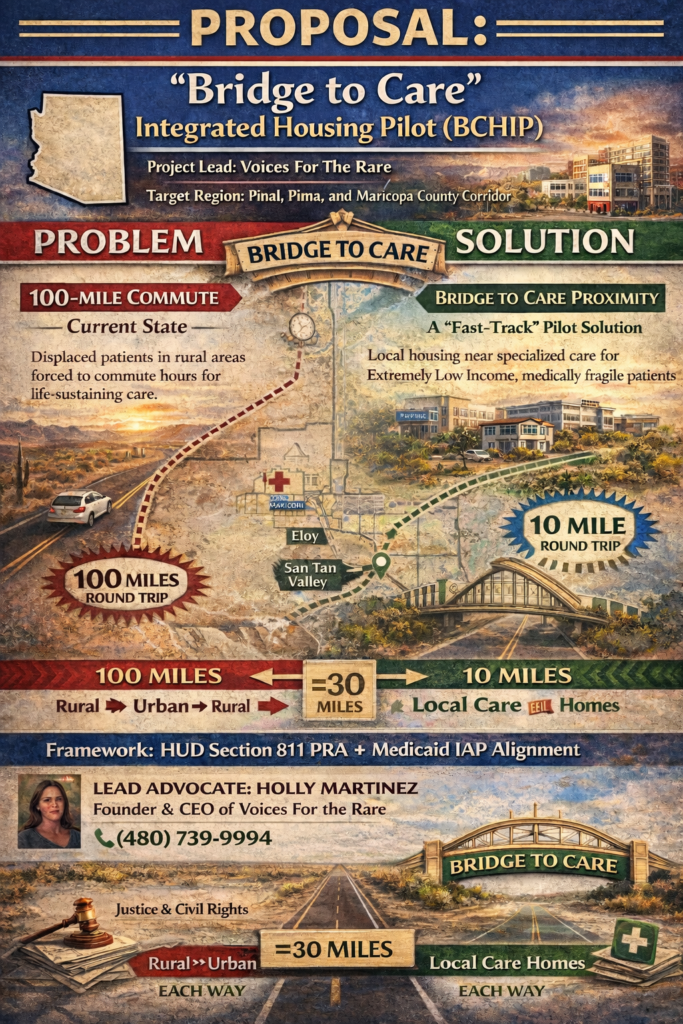
    SAN TAN VALLEY, AZ — March 6, 2026 — Voices For The Rare, led by Founder and CEO Holly Martinez, today announced the formal launch of the Bridge to Care Housing Integrated Pilot (BCHIP). This policy initiative addresses a critical gap in Arizona’s healthcare infrastructure: the systemic displacement of medically fragile residents in rural counties.

    Currently, patients in rural Pinal County must endure 100-mile round trips for life-sustaining specialty care, often while recovering from major surgeries. BCHIP proposes a revolutionary “Fast-Track” model that aligns HUD Section 811 PRA resources with Medicaid transition services to house patients within 10 miles of their medical hubs.

    “We are witnessing ‘administrative violence’ where a patient’s zip code determines their survival,” said Martinez, who developed the pilot while recovering from a second mandibulectomy. “BCHIP is about fiscal and moral common sense. By moving patients closer to care, we reduce the state’s transportation costs and transform residents from ‘burdens’ on the emergency system into active assets to society.”

    Media Contact: Holly Martinez

    admin@voicesfortherare.org

    (480) 739-9994


    Voices For The Rare - Rare Disease Housing Advocacy Arizona

  • A Letter from the Founder: Why We Are Taking “Zebra Safety” to Washington

    To my fellow advocates, neighbors, and leaders,

    My name is Holly Martinez, and I am currently recovering from major surgery. I am non-verbal, I use a wheelchair/walker, and I am an Arizona constituent. But more than that, I am a survivor of a system that is currently failing its most vulnerable citizens.

    This month, I am traveling to Washington D.C. for the Disability Policy Seminar and Hill Day. I am not just going to share my story; I am going to demand a seat at the table for the rare disease and physically disabled communities.

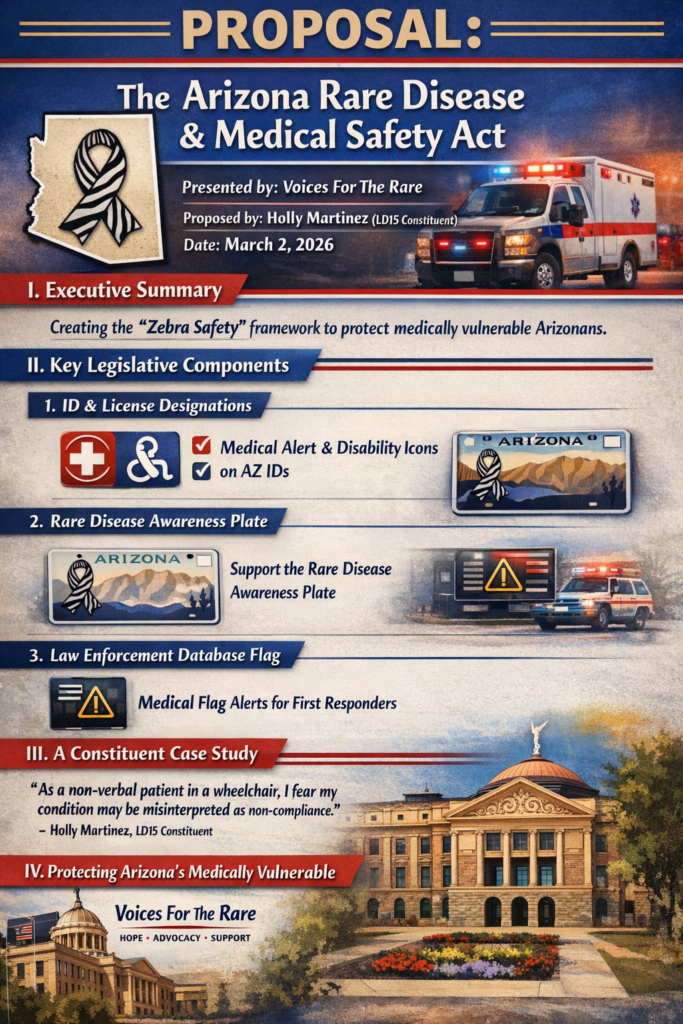
    The “Zebra Safety” Act

    In Arizona, we face a silent crisis. For those of us with communication barriers or rare medical conditions, a routine interaction with law enforcement or emergency services can become life-threatening in seconds. If I cannot speak to explain my medical needs, I am at risk.

    The Zebra Safety Act is my proposal to bridge this gap. It creates a voluntary framework for medical identifiers on state IDs and links “Medical Flags” to vehicle databases. It is a common-sense solution designed to save lives by providing clarity during a crisis.

    Voices For The Rare - Rare Disease Medical Safety Act Advocacy Arizona

    The Fight for Housing Equity

    While I advocate for safety on our streets, I am also fighting for safety in our homes. Currently, agencies like ADOH and DDD are gatekeeping federal HUD Section 811 PRA vouchers. These funds are intended to provide permanent supportive housing for people with disabilities, yet “administrative burdens” and narrow qualifications are leaving medically fragile individuals—like myself—trapped in unsafe environments or homeless in their cars.

    Our Mission in D.C.

    When I meet with Senator Mark Kelly and Senator Ruben Gallego, my message will be simple: Inclusion is not an option; it is a civil right.

    • We need federal oversight of how Arizona manages housing vouchers.
    • We need Medicaid protected as a vital lifeline for complex care.
    • We need the Zebra Safety model adopted to protect the non-verbal and medically complex.

    I am re-learning to walk and talk, but I have never been more certain of my voice. I invite you to read our full legislative proposal below and join Voices For The Rare as we take this fight from Arizona to the Capitol.

    In Solidarity,

    Holly Martinez Founder, Voices For The Rare

    .


    🏛️ Policy Spotlight: The HUD 811 PRA Crisis in Arizona

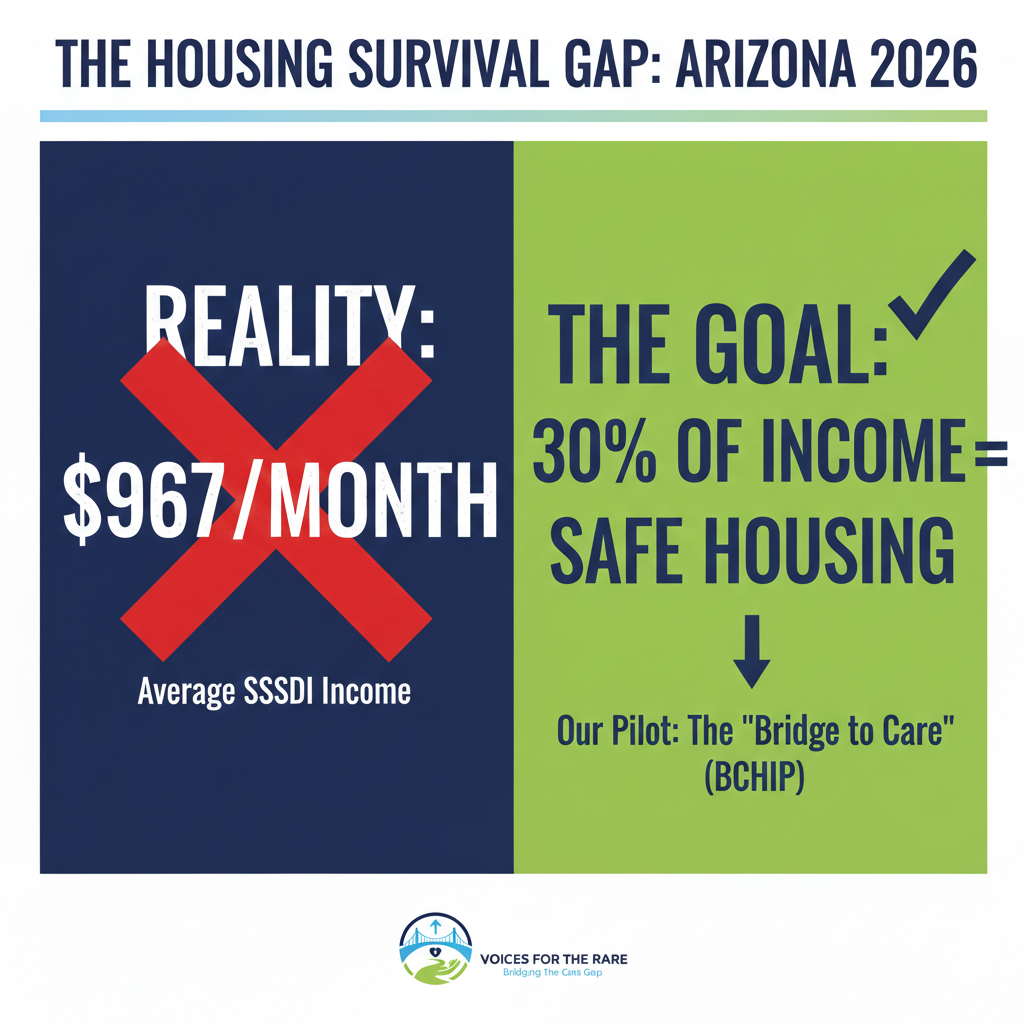
    The Conflict: Federal Intent vs. State Execution The HUD Section 811 Project Rental Assistance (PRA) program was created to expand housing for all extremely low-income (ELI) people with disabilities. However, Arizona’s implementation has created a “silo” system that ignores thousands of medically fragile residents.

    FeatureFederal HUD RequirementArizona’s Current Gatekeeping
    EligibilityAll persons with disabilities (Physical, Rare, Developmental, etc.)Effectively restricted to DDD or SMI behavioral health members.
    GoalCommunity Integration & IndependenceInstitutionalization (Nursing Homes) as the only “choice” for physical disabilities.
    Referral PathDirect clinical referral based on medical necessity.“Red Tape” loop that requires a DD diagnosis even for physically paralyzed patients.

    The Legal Reality: Section 504 & The ADA Under Section 504 of the Rehabilitation Act, no program receiving federal funds can discriminate based on disability type. By limiting HUD 811 vouchers to specific “diagnoses,” Arizona is practicing Categorical Discrimination.

    Our Demand: We are calling for an immediate Civil Rights Audit of the Arizona Department of Housing (ADOH). We demand that housing referrals be opened to all ALTCS members who meet ELI requirements, regardless of whether their disability is developmental or physical.

  • Planned Development Activity (The “Bridge to Care” Pilot)

    Voices For The Rare is pioneering a “piggyback” development model that leverages the legislative framework of SB 1080 and SB 1096.

    While these bills, championed by Senate Majority Leader John Kavanagh, are designed to create housing for Arizona’s medical essential workers, teachers, and first responders, our pilot ensures that the most vulnerable—Extremely Low Income (ELI) who are disabled, rare disease patients that are on ALTCS—are not left behind.

    Key Integration Pillars:

    Inclusive Workforce Hubs:
    We are partnering with the vision of workforce housing to embed high-acuity, medically-integrated units within these developments. This ensures that the rare disease and physically disabled community lives alongside the very medical professionals who sustain their care.

    ALTCS-Ready Infrastructure:
    Our CHDO focus is specifically on the Extremely Low Income (ELI) population. We are designing the “Bridge to Care” model to accept Section 811 PRA and ALTCS housing supports, turning standard workforce buildings into life-saving clinical housing.

    Strategic Partnership:
    In discussions with Majority Leader Kavanagh, we have identified that once these bills pass, the “Bridge to Care” pilot will serve as the premier model for how Arizona can house its workforce and its medically fragile patients in one cohesive, transit-oriented environment.

  • Voices For The Rare Submits LOI: Launching the “Bridge to Care” Integrated Housing Pilot

    Voices For The Rare - Rare Disease Housing Advocacy Arizona

    Phoenix, AZ – February 12, 2026 – Voices For The Rare, an advocacy organization dedicated to empowering individuals with rare and complex physical disabilities, today announced a significant step forward in addressing Arizona’s critical housing gap. The organization has formally submitted a Letter of Intent (LOI) to the Arizona Department of Housing (ADOH), proposing the “Bridge to Care” Integrated Housing Pilot (BCHIP) and commencing the process for CHDO (Community Housing Development Organization) Certification.

    This groundbreaking initiative seeks to expand the existing Section 811 PRA (Project Rental Assistance) program, specifically targeting ALTCS-enrolled individuals with rare and complex physical disabilities who require immediate and sustained proximity to Tier-1 medical centers.

    Addressing a Critical Gap: Housing as Healthcare

    “From my current medical recovery setting at BUMC, I have firsthand experience of the devastating fiscal and human cost of medical displacement,” states Holly Martinez, Founder & Executive Director of Voices For The Rare. “Our community faces unique challenges; existing housing programs often fail to accommodate the specialized needs of rare disease patients, leaving them vulnerable to repeated hospitalizations and a diminished quality of life. The ‘Bridge to Care’ pilot is designed to fill this critical void.”

    Key Pillars of the “Bridge to Care” Pilot:

    • Strategic Expansion of Section 811 PRA: Proposing an expansion of eligibility to include individuals with rare and complex physical disabilities, ensuring access to a continuum of care beyond traditional categories.
    • Repurposing Underutilized Assets: Leveraging state legislation (SB 1080 and SB 1096) to identify and repurpose underutilized public and religious properties into dignified, medically-integrated housing communities.
    • Proximity to Tier-1 Medical Centers: Ensuring all housing units are located within a 10-mile radius of essential medical facilities, reducing transportation barriers and improving health outcomes.
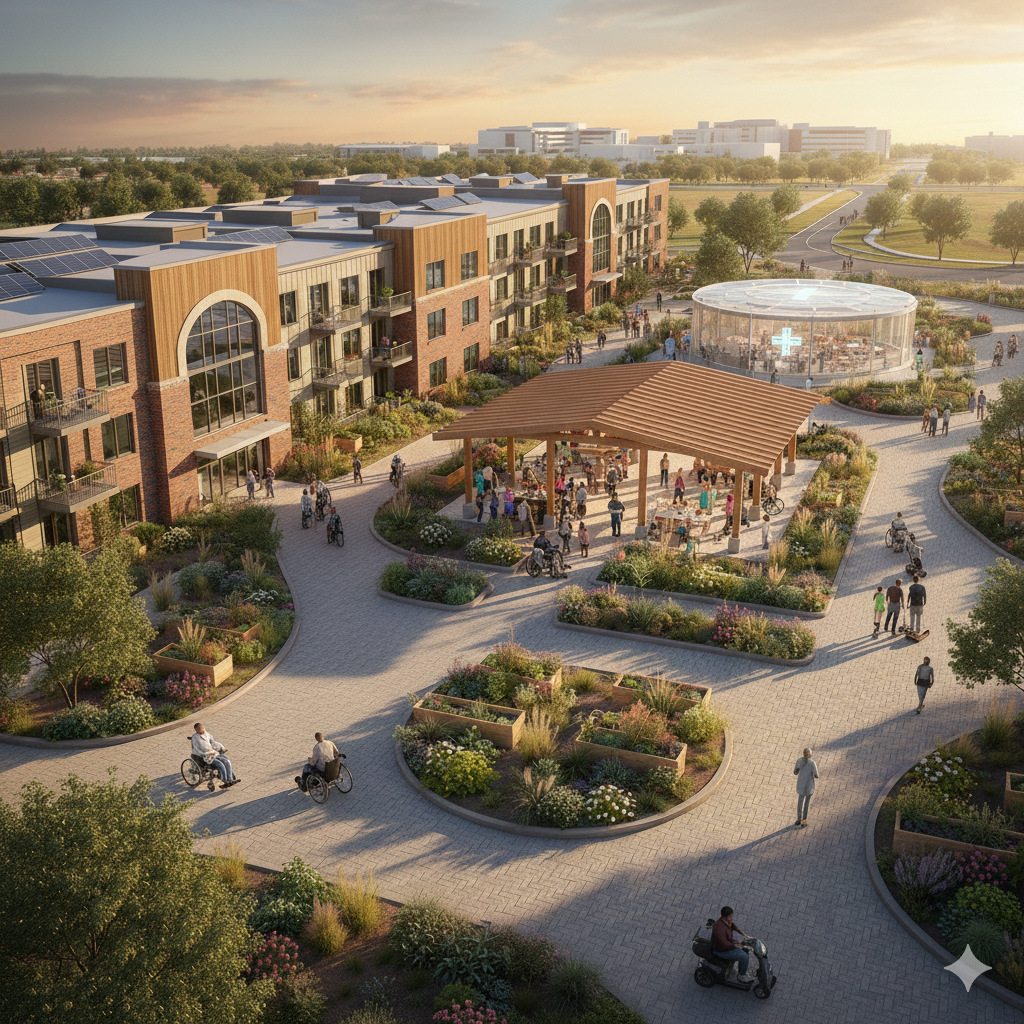
    • Integrated Support Systems: Designing communities with ADA-compliant infrastructure, wide-path transit for mobility devices, accessible common areas, and coordination with in-home care services (AHCCCS H2O).

    A Vision for Sustainable, Life-Sustaining Housing

    Voices For The Rare has compiled extensive data highlighting the significant state expenditures associated with medical displacement and frequent readmissions. By providing stable, accessible housing, the BCHIP aims to not only enhance the lives of Arizona’s most vulnerable residents but also achieve substantial cost reductions for the state.

    “We are eager to collaborate with the Arizona Department of Housing to present our findings and demonstrate how this pilot can create a scalable model for diagnosis-inclusive housing,” adds Martinez.

    Voices For The Rare - Rare Disease Housing Advocacy Arizona

    Call to Action: Support the “Bridge to Care”

    We invite our community and supporters to learn more about the “Bridge to Care” pilot and to lend their voice in support. Your advocacy is crucial in making this vision a reality.

    ACT NOW: Send a Letter of Support for the Bridge to Care Pilot

    Body Text: We need your help to show the Arizona Department of Housing that our community is ready for change. Please copy and paste the email template below and send it to the state directors to let them know you support Voices For The Rare.

    How to help in 3 minutes:

    1. Copy the text below.
    2. Open your email.
    3. Send to: ruby.dhillon@azhousing.gov
    4. CC: info@voicesfortherare.org (So we can track our impact!)

    SUBJECT: Public Support for Voices For The Rare & the BCHIP Pilot

    Dear Director Dhillon-Williams,

    I am writing to express my strong support for the Letter of Intent submitted by Voices For The Rare regarding their CHDO Certification and the proposed “Bridge to Care” Integrated Housing Pilot (BCHIP).

    For too long, Arizonans with rare and complex physical disabilities have faced medical displacement because they do not fit into existing “referral boxes.” I support the expansion of the Section 811 PRA program and the repurposing of assets under SB 1080/1096 to provide life-sustaining housing near our state’s Tier-1 medical centers.

    It is time for Arizona to lead the way in disability-inclusive housing. I stand with Holly Martinez and Voices For The Rare in their mission.

    Sincerely,

    [Your Name] [Your Zip Code]

  • The Victory: Upholding the Law and Protecting Community Trust

    The Victory: Upholding the Law and Protecting Community Trust

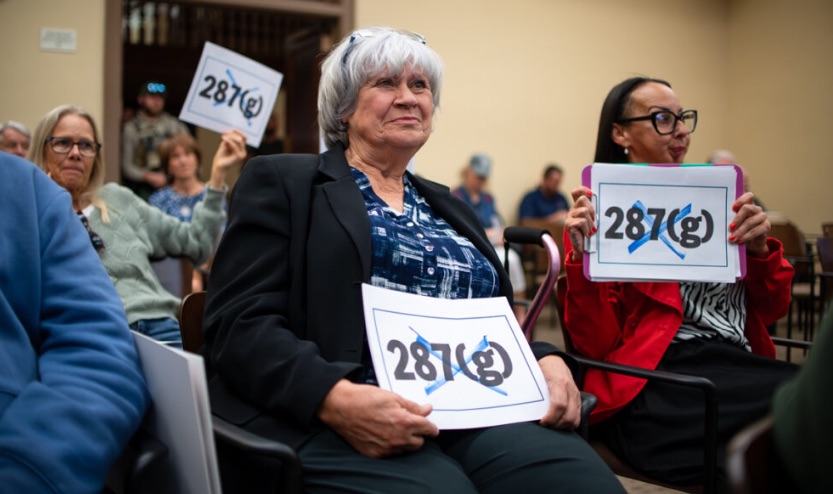
    Yesterday, January 21, 2026, marked a significant turning point for Pinal County. The community showed up in force to the Board of Supervisors meeting in Florence, and the results were a testament to the power of collective action.

    For our Voices for the Rare community, this was more than just a meeting; it was our first major engagement of the year, and it was a victory on two fronts: protecting the civil rights of our immigrant neighbors and opening a new door for our residents living with disabilities.

    The primary focus for many was the controversial 287(g) task force model agreement that the Pinal County Attorney’s Office (PCAO) had attempted to enter into with ICE.

    The Board of Supervisors, acting on a legal opinion from outside counsel, officially disapproved and voided the agreement. The legal analysis was clear: the County Attorney did not have the authority to bind the county to such a federal contract without Board approval. Furthermore, the agreement would have essentially turned local investigators into federal immigration agents—a move that risked:

    • Racial Profiling: Harassment of “brown citizens” and immigrant families.
    • Erosion of Trust: Discouraging victims and witnesses from coming forward.
    • Fiscal Liability: Diverting local funds and exposing the county to civil rights litigation.

    While the Sheriff’s existing jail-based enforcement remains, the rejection of this specific task-force model prevents ICE powers from expanding into our everyday community spaces.

    Here is the link: https://explore.pinal.gov/m/NewsFlash/Home/Detail/2183

    FOX 10 News Coverage

    The energy in the room was undeniable, and our powerful turnout didn’t just catch the Board’s attention; it brought out the media, too. FOX 10 News was present to document this crucial moment for civil rights in Pinal County. Their report captures the significance of this decision and shows what happens when the community shows up in force.

    You can watch their full report on the meeting below:


    Shifting Focus: From Enforcement to Community Care

    Our advocacy yesterday wasn’t just about saying “No” to harmful policies; it was about saying “Yes” to the people who are often left behind.

    I had the privilege of presenting the Section 811 Project Rental Assistance (PRA) Program to the Board. This HUD-funded initiative is specifically designed for:

    • Extremely Low-Income Households: Those at or below 30% of the Area Median Income (AMI).
    • People with Disabilities: Providing long-term, integrated supportive housing so individuals can live independently rather than in institutions.

    Why Pinal County Needs This Now

    With Pinal County’s population skyrocketing (estimated at over 560,000 in 2026), the housing crisis is hitting our most vulnerable the hardest. Current demographics highlight why this shift is vital:

    • Poverty and Disability: Approximately 10.8% of our residents live below the poverty line, and many of these individuals are living with disabilities that require both affordable rent and on-site support.
    • Racial Equity: With a Hispanic/Latino population of roughly 30%, moving away from “enforcement-first” policies ensures that all residents feel safe seeking the services they need.

    The Board’s commitment to look into the Section 811 PRA Program is a massive step toward a Pinal County that prioritizes care over harassment.

    Voices For The Rare - Rare Disease Housing Advocacy Arizona
NO 287(G)

    What’s Next for Voices for the Rare?

    This momentum is incredible, but our work is just beginning. We must ensure the Board follows through on their promise to research Section 811 and that no “back-door” immigration agreements are revived.

    Special thanks to: Elizabeth Lee, Queen Creek San Tan Valley Indivisible, RAZE-Rural Engagements, and everyone who showed up.

    “When we organize, we win.”